







Use a dedicated password manager to generate, store, and organize strong, complex passwords for every service you use.
Files like "190K MAIL ACCESS VALID HQ COMBOLIST MIX.zip" represent the persistent "recycling" of stolen data on the dark web. While the numbers may seem daunting, modern security practices like and MFA have made these lists significantly less effective for attackers than they were a decade ago.
If you’re considering downloading it:
In the shadows of the internet—across dark web forums, private Telegram channels, and invite‑only Discord servers—a quiet trade flourishes. Every day, files with names like “ ” are posted, sold, and shared. To an untrained eye, this might look like random technical jargon. But to cybercriminals and security researchers alike, each part of that filename carries a precise meaning—and a serious warning.
Understanding "190K MAIL ACCESS VALID HQ COMBOLIST MIX.zip": Risks, Mechanics, and Cybersecurity Defense
Ignorance is not a defense. “I just downloaded it to see what it was” has never worked in court.
Historically, security researchers dismissed combolists as containing mostly junk—old, expired, or completely fake credentials. The SANS Internet Storm Centre noted that most “combo” files found on the internet are “compilations of old leaks but presented as ‘fresh’, ‘verified’ or ‘valid’ by the attacker”. In one researcher’s analysis, many of the accounts listed had either been deleted for years or were subject to changed password policies that rendered them useless.
For organizations, the consequences can be even more severe:
Online businesses should use CAPTCHAs, rate-limiting, and web application firewalls (WAFs) to detect and block the automated bot traffic used to test combolists. Conclusion
The simplest use is logging directly into the email accounts themselves. Once inside, the attacker can:
: A text file structured explicitly for automated hacking tools. It formatted as a list of credentials, usually separated by a colon or semicolon (e.g., username:password or email:password ).
Products
-
 Sticker Pack
$10.00
Sticker Pack
$10.00
-
 Minimalist Bifold Cardholder
$60.00
Minimalist Bifold Cardholder
$60.00
-
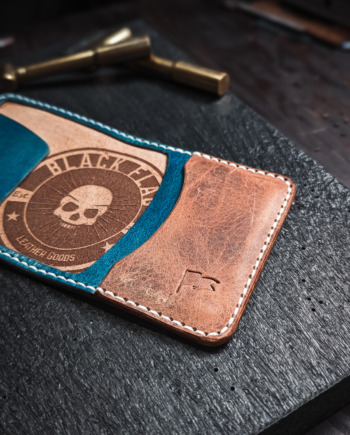 Slim Bifold Wallet
$100.00
Slim Bifold Wallet
$100.00


